



Standardize & Systematize Before You Scale
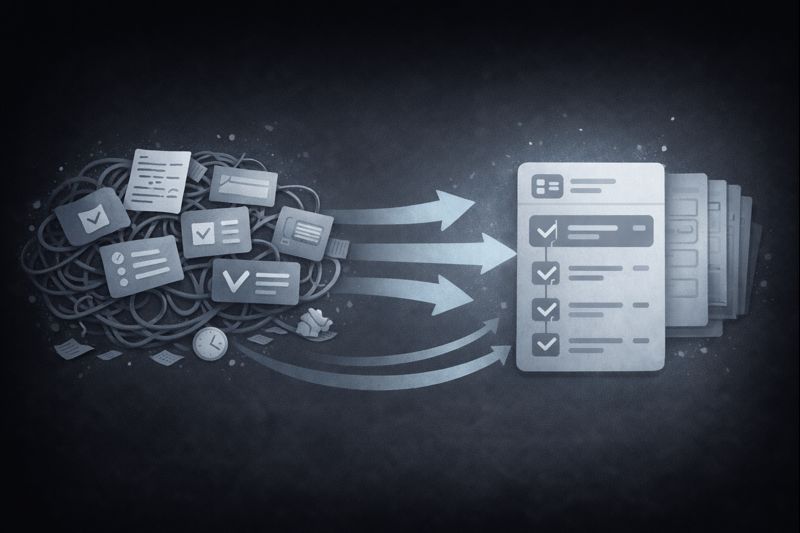
Principle: Don’t scale chaos. Document and streamline your core processes on a small scale, then scale up growth.
One of the biggest mistakes growing SMEs make is trying to scale while everything is still running on memory, hustle, and “we’ll figure it out”.
It works when you’re small. But once volume increases, those ad-hoc habits become bottlenecks — and the business starts to feel heavier every month.

Why It Matters
A business that grows on ad-hoc habits will hit a wall — or collapse under its own inefficiency. Not because the team isn’t talented, but because the delivery system can’t handle the load.
The companies that scale successfully are the ones with robust systems in place. They can handle increased volume without quality breaking.
Without standardisation, growth usually causes:
• Slower delivery times
• More mistakes and more rework
• Inconsistent customer experiences
• Founder bottlenecks and constant escalation
• A team that feels permanently overwhelmed
This is where many SMEs get stuck. They’re winning more work, but the business gets harder to run as it grows.
At WAi Forward, we see this all the time with UK SMEs. They’re brilliant at what they do — but often lack the structure to consistently deliver that brilliance as they grow.
That’s why we build structured automation around clear workflows. It’s not about adding complexity. It’s about making the business repeatable.
Application: Build SOPs for What Drives Your Business
Start with the work that creates revenue and retention. The processes that happen every week. The ones that cause stress when they’re not done properly.
Create a simple SOP (Standard Operating Procedure) for each one. Not a giant corporate document. Just something repeatable that your team can follow without guessing.
Examples of SOPs worth documenting first:
• Lead follow-up and qualification
• Customer onboarding
• Delivery / fulfilment handover
• Monthly reporting
• Invoicing and payment follow-up
A good SOP is usually just: a checklist, a template, and clear ownership.
And once it runs smoothly with 5 customers… it’s much easier to run with 50.
How WAi Forward Helps You Standardize Without Creating More Admin
Standardisation only works when it becomes easier to follow the process than to ignore it.
That’s where structured automation matters. WAi Forward is built on RunWAi — our object-oriented AI engine — which treats work as structured objects (leads, tasks, posts, invoices) with clear lifecycles.
That structure makes it easier to build and enforce consistency, without constant founder oversight.
What standardisation looks like across our ecosystem:
Lead the WAi: standardise lead nurture and follow-up so you don’t rely on memory or manual chasing.
PathWAI: build repeatable workflows using templates, checklists, and clear ownership.
PAI it Forward: systemise invoicing, categorisation, and reporting to reduce errors and end-of-month panic.
And because WAi Forward supports hybrid AI + human workflows, you keep quality control. AI assists and drafts, humans review and approve — so standards stay high while effort goes down.
The Rule: The 70% Rule
This is a simple way to avoid scaling a broken process:
If you’re 70% confident a process works well and your team understands it, you’re ready to scale that area.
If not, refine it first — then increase volume. The 70% rule prevents you from amplifying inefficiencies.
Before scaling, ask:
• Is this process clearly defined?
• Can someone follow it without asking you questions?
• Is ownership obvious?
• Are there checkpoints to catch mistakes early?
If the answer to any of those is “no” — you don’t need more leads. You need a cleaner system.
Roundtable Question
Be honest: what would break first if your customer volume doubled next month?
Sales follow-up, onboarding, delivery, reporting, or finance admin?
And what’s the first SOP you’d build to stop that chaos before it starts?