



Consistency Beats Intensity
Principle: Regular, consistent execution outperforms occasional bursts of intense effort.
Most SMEs don’t fail because they’re not working hard enough. They fail because everything is run in cycles of urgency: a big push, a burst of motivation, a late-night sprint… followed by burnout, silence, and recovery.
Intensity feels productive. But consistency builds momentum.

Why It Matters
Businesses built on reliable routines deliver steady results. Businesses built on sporadic “big pushes” create roller-coaster outcomes: busy months, quiet months, unpredictable cash flow, inconsistent delivery, constant resets.
It’s the difference between building a system… and constantly trying to restart one.
The truth is: consistency is the quiet engine that keeps the business moving even when you’re busy.
And consistency protects the business from one of the biggest hidden risks in SMEs: things falling through the cracks.
The SME Pattern Most People Don’t Admit
Many businesses accidentally run on “emotional operating systems”:
• When you feel motivated → marketing happens
• When you feel behind → you chase sales follow-ups
• When a client complains → delivery gets fixed
• When cash gets tight → invoices finally go out
• When everything breaks → you rebuild the workflow
That’s intensity. It keeps you alive, but it doesn’t scale.
Mature operations run on rhythm, not adrenaline.
Application: Build Weekly Rhythms You Can Sustain
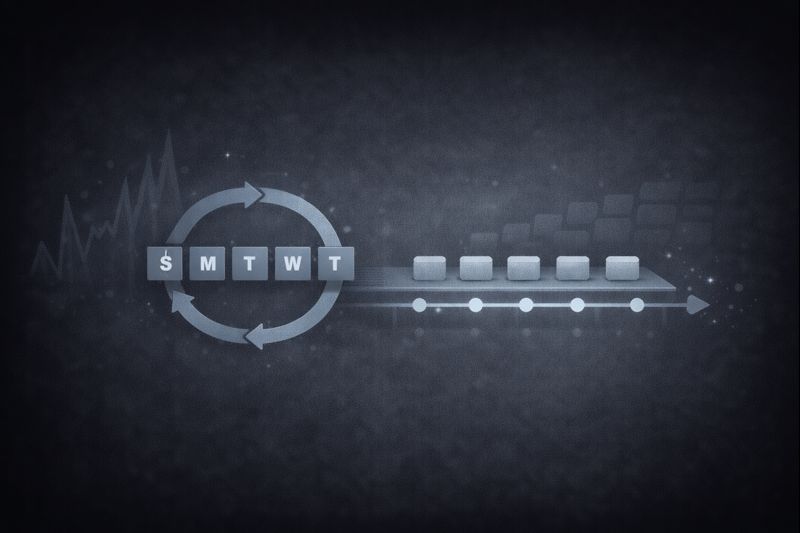
The simplest way to build consistency is to create a repeatable weekly cadence. Not a “perfect routine” — a realistic one.
Start with a few anchor points:
Examples of weekly rhythms that work in real SMEs:
• A set day for strategy review (30–60 minutes)
• A content rhythm (write Monday, schedule Tuesday)
• Daily 10-minute team check-ins (clarity + ownership)
• A weekly pipeline review (leads, next actions, blockers)
• A fixed time for finance admin (invoices, follow-ups, cash checks)
The goal is not to do more. The goal is to make sure the important work happens even when you’re busy.
Because the businesses that win aren’t the ones who “go all in” for one week. They’re the ones who can execute reliably for 52 weeks.
Design Systems So the Work Happens Anyway
The next level of consistency is when the business runs even if nobody feels “in the mood”.
This is where systems matter. You don’t rely on memory. You don’t rely on motivation. You rely on structure.
At WAi Forward, this is exactly what we build: calm systems for serious SMEs.
Our ecosystem is powered by RunWAi — our object-oriented AI engine — which treats work as structured objects (leads, tasks, posts, invoices) with clear lifecycles.
That lifecycle structure is what creates consistency: it makes sure follow-ups happen, tasks progress, and workflows stay predictable — without founder chasing.
Metric: Measure the Cadence Before You Scale It
A simple rule: don’t scale what isn’t consistent yet.
Before you try to “do more”, track whether you can do it reliably.
Good consistency metrics for SMEs:
• On-time project completion rate
• Weekly marketing output (posts, emails, outreach)
• Lead response time
• Proposal turnaround time
• Weekly admin completion (invoicing, reporting, finance checks)
If it’s erratic, make it consistent before making it bigger.
The goal is a cadence your business can sustain even during busy periods — because that’s the mark of a mature operation.
Roundtable Question
Be honest: does your business run on consistent routines… or last-minute intensity?
And what’s the one habit or weekly rhythm that would make the biggest difference if you nailed it?